
Small chips, big impact: SPHERICAL is making satellites smarter

A satellite is only as strong as the system that supplies its power. SPHERICAL, located in Rotterdam and Noordwijk, designs chips and electronic sub-systems for the aerospace sector. Its first product is a Power Conditioning and Distribution Unit (PCDU), a type of smart fuse box for satellites. It distributes power to crucial parts such as communications and navigation systems. Bastiaan Bom, co-founder, explains the step from specialized chip technology to international aerospace chains. “The Netherlands is good at finding and using the right niches that other countries need to complete their products and missions.”
The challenge: making electronics suitable for space
Aerospace electronics face a lot of challenges. Components need to be resistant to radiation and extreme temperature changes. Furthermore, the lifespan of the components in a system is of utmost importance as a failure in space often means the end of a satellite. “A lot of electronics in space are made from a limited selection of generic components,” explains Bom. “If a part is no longer available, you often have to modify the whole design. This makes systems large, inefficient and vulnerable.”
SPHERICAL is dealing with this issue by designing chips that integrate different functions. This is making systems up to 10 times smaller and more efficient. By reducing dependency on generic components from the United States or other parts of the world, the company offers a solution that is scalable, flexible and sustainable. “Our chips are manufactured in Europe using technologies from the automotive sector that are also suitable for aerospace use. This helps further European independence and the strengthening of the regional ecosystem.” Bom is also connected to dual-use technologies whereby a product can be used for both civilian and military uses. SPHERICAL was selected for the NATO DIANA Accelerator programme and is the only aerospace company in the Netherlands that is working on this. “It is a wonderful step as we also help further some aspects of communications and observation. In terms of defense, you need to be able to communicate from everywhere in the world and, in doing so, reduce dependency.”
“The due diligence process was intensive. But it gave us an important certification which enabled us to attract other investors. ”

Testing for space
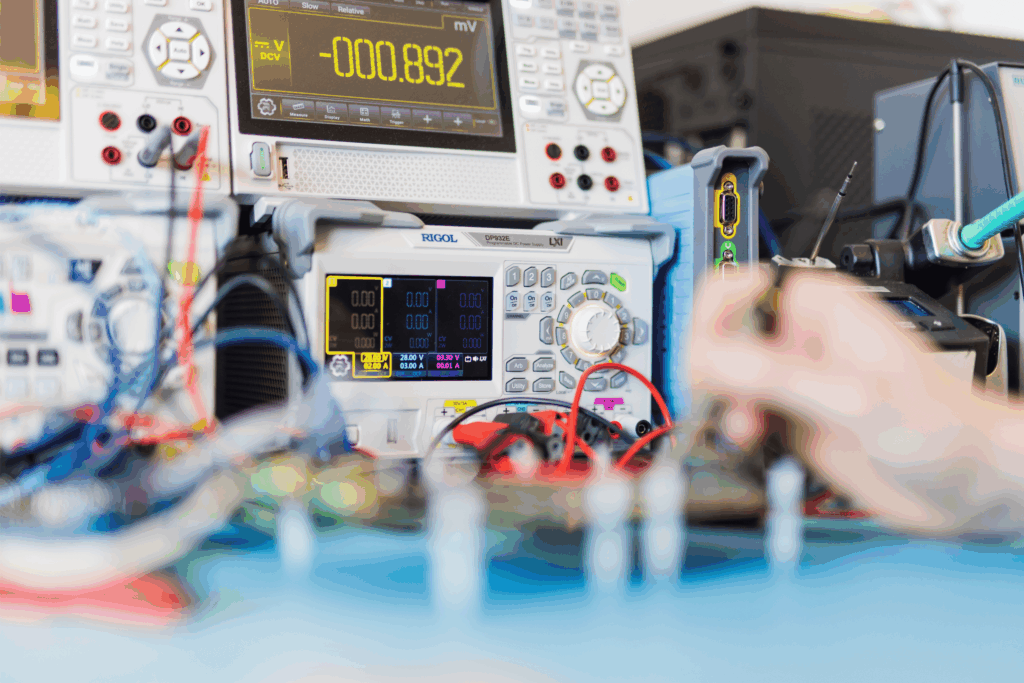
Systems that go into space must be proven to work. To do this, the company is working with Dutch facilities such as the Netherlands Aerospace Centre. Radiation and vibration tests can be done there to check if components are suitable for the lifespan of a space mission.
This test phase is essential to gain the trust of clients and partners. Failure is expensive, visible and often unrepairable in aerospace. A smaller and smarter system is only valuable if it is also reliable enough to be launched.
Collaboration as entry to new chains
For SPHERICAL, growth was not only about technology but also about collaboration. A chance encounter on a flight with VEOWARE, a Flanders-based company, led to a collaboration on smaller power systems.Both companies were facing the same dependence on American components. Through the Crossroads programme, both companies were able to move their collaboration forward. The programme provided not only financial support, but also guidance with administrative processes. InnovationQuarter brainstormed with them as well, helping them to maintain focus so that they could concentrate on technological progress. UNIIQ also played a role in the early financing.
“The due diligence process was intensive. But it gave us an important certification which enabled us to attract other investors. It was a real stamp of approval for our further development.”
From the Dutch to international markets
The Dutch market is limited for satellite makers. SPHERICAL’s most important clients are in Europe and beyond. This is why export opportunities and international networks are so vital. Through the Enterprise Europe Network (EEN), they took part in a trade mission to Japan. “Japanese satellite manufacturers need our products. We want to get to know this market better and use our expertise there,” says Bom.
Other initiatives like the ChipNL Competence Centre also help SPHERICAL position itself in the Dutch and European semiconductor ecosystem. The ChipNL Competence Centre supports companies with access to pilot lines, the design platform, financing opportunities, and talent programs.
Do you also want to find your place in international high tech chains?
SPHERICAL shows how a strong niche technology can grow through European partnerships, international matchmaking, and access to the markets that need your innovation.
What is now possible
SPHERICAL is working towards a future where satellites are smaller, more flexible, and less dependent on international components. The aerospace industry is the first market, but the knowledge of chip design and system integration may also be relevant for aviation and other high tech sectors at some point.
The goal is clear: make big systems smarter with small chips. And a smart fuse box for satellites may gain ground in international aerospace chains.
Are you also ready to move to international chains?
Export opportunities are not automatic. The high tech and aerospace sectors definitely need collaboration, test facilities, funding and access to international networks. Explore the opportunities to help move your innovation further.