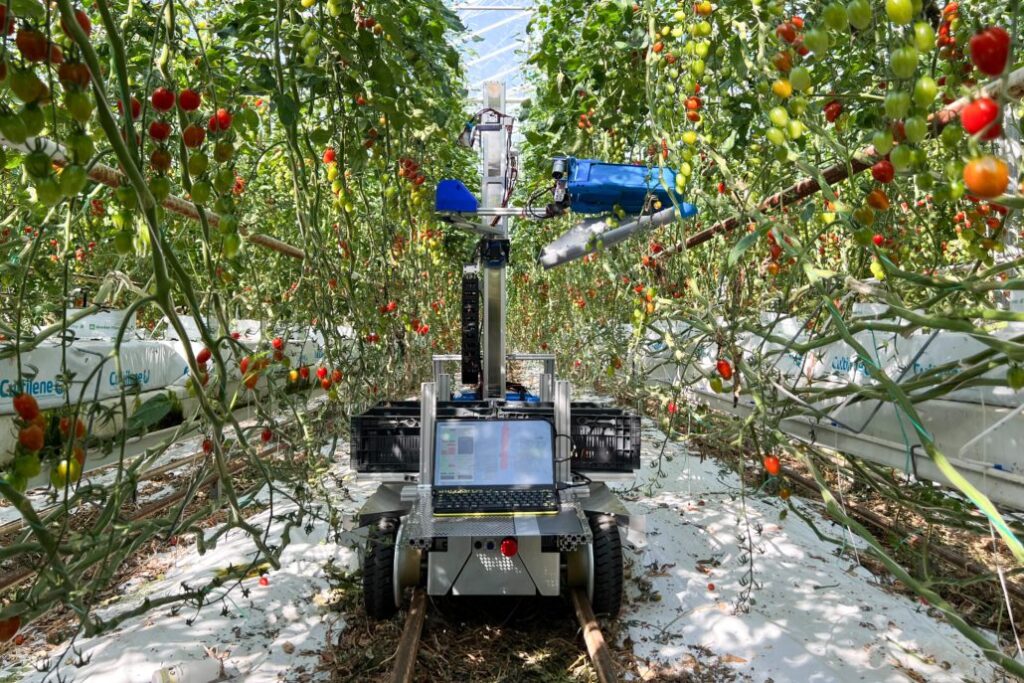
2026: The dawn of horticultural robotics

As the new year begins, it feels like the right moment for a few prophecies, omens and personal reflections on horticultural robotics. To begin with a prophecy: I expect we will look back on 2026 as the year that marked the dawn of horticultural robotics.
Low labour productivity impact
The horticultural sector, and the region of South-Holland, must increase labour productivity coming years to maintain a competitive production cluster. The future of production is at stake. Not only do we see stronger a public push to reduce dependence on migrant labour, but attracting the right labour is becoming increasingly difficult. At the same time, we see a number of companies deciding to strategically move horticultural production to Southern Europe and North Africa. This is driven not only by favourable production climates, but increasingly by the need to compete with Dutch labour costs, for example in production of snack tomatoes.
Beyond tech push: how robotics solves labour shortages in horticulture
Robotics should therefore be seen as an essential technology for ensuring a sustainable and societal accepted sector in the Netherlands, and as a potential high-value addition to our horticultural technology export portfolio.
Initiatives for horticultural robotics in Zuid-Holland
Fortunately, Zuid-Holland offers a perfect storm for innovation. It hosts the world’s densest ecosystem of growers, technology companies, testing facilities, and commercialisation partners, supported by various initiatives such as RoboCrops, World Horti Center, and leading events like Greentech.
Turning points in AgTech
The basis of my prophecy is that we are seeing the early signs in the sector and patterns that mirror turning points in other agricultural subsectors. Some of the omens visible in AgTech and horticulture today include:
- Repeatable sales of outdoor niche robotics in other agricultural subsector, such as viral-detection robots by H2L Robotics, a company based in Delft.
- Production scale-up of VC-funded laser-weeding robotics, with Carbon Robotics starting LaserWeeder manufacturing in the Netherlands (read more in Dutch)
- Significant portfolio growth in robotics and automation from deeply embedded horticultural technology companies like Gearbox Innovations, including their Harvest Assistant.
- Deployment scale of niche greenhouse robotics by companies such as Aisprid, which has already installed impressive amounts of robots in French greenhouses, and is now preparing its international expansion (read more)
Three steps of success
In my role as an Account Manager Foreign Investment at InnovationQuarter, I have supported many international horticultural technology companies in their expansion to the Netherlands. Drawing on six years of experience, I’ve distilled several key insights on what it really takes to scale horticultural robotics. These insights fall into three themes: international entrepreneurship, deep collaboration with growers, and smart investment for scale.
1) International entrepreneurship
International collaborations are a defining strength behind many successful examples we see today. Automotive giants pivoting like the Denso-Certhon partnership; technology specialist integration like Ridder Metomotion partnership; or tech-grower collaborations such as Four Growers and Westburg.
Daring, cross-border collaboration is necessary, and I think even more so in a world where international stability is not a given and business relationships are becoming increasingly transactional. We should dare to think beyond zero-sum games and focus on strategic cooperation where interests create synergy.
2) Tech meets growers
The proof is in the pudding. Tech companies need to talk to growers and robots need to spend time with plants, something my hortitech guru and colleague Colinda de Beer have been preaching for years. Too often, technology companies focus too early and too much pushing their technology. They expect their company to realize commercial growth too soon; and often because they are telling their investors or R&D budget decision-makers what they want to hear.
What tech companies really need is early feedback, though love from growers, and to look beyond technology push. What challenges do growers face in terms of labour productivity, knowledge, operations? You can’t desk-study that shit. And once you’ve managed to develop a MVP to validate, the next question is: What do technology companies offer growers to take the first loss of commercialization of their robot?
3) Smart investment for scale
Investment is needed to speed up development and adoption from a company and societal perspective, and it must come from various stakeholders in the ecosystem:
- Private investment should take the lead. This should come from venture capital, pivoting industry corporates and growing horticultural mechatronics companies.
- Public funding in the Netherlands, such as company R&D budget subsidies as WBSO or project funding opportunities like EIP Collaboration on Innovation will leverage private investments. But smart and aggressive public funding to accelerate robotic commercialisation is needed. It is a smart long-term investment for the sustainability of Dutch horticultural production sector, and strategic positioning in future technology exports.
- Banks and financial institutions also have a role in de-risking commercialisation of horticultural robotics. Robotics offer new commercial opportunities, like leasing, but also contribute to mitigating their exposure in a sector facing an ever-increasing long-term issue of a tightening labour market in the Netherlands, and all high-income markets.
The dawn of horticultural robotics is more than a tech trend, it’s critical for securing the future of the Dutch horticultural sector. The industry needs ambitious international entrepreneurs, robots training in greenhouses, and financiers who dare to lead. In the philosophical words of Churchill or Mulisch, 2026 represents the “end of the beginning.” And in the technical terms of Gritd, it is the moment when a number of horticultural robotic companies will progress into Stage 2 of their Startup Framework. What will be your role in 2026?
Want to learn more about HighTech Horticulture?
Download your free guide to HighTeach Horticulture here, to learn more about partnerships and networks organisations, international companies that already have set up shop in our region, funding and incentives and talent and recruitment.
See it yourself
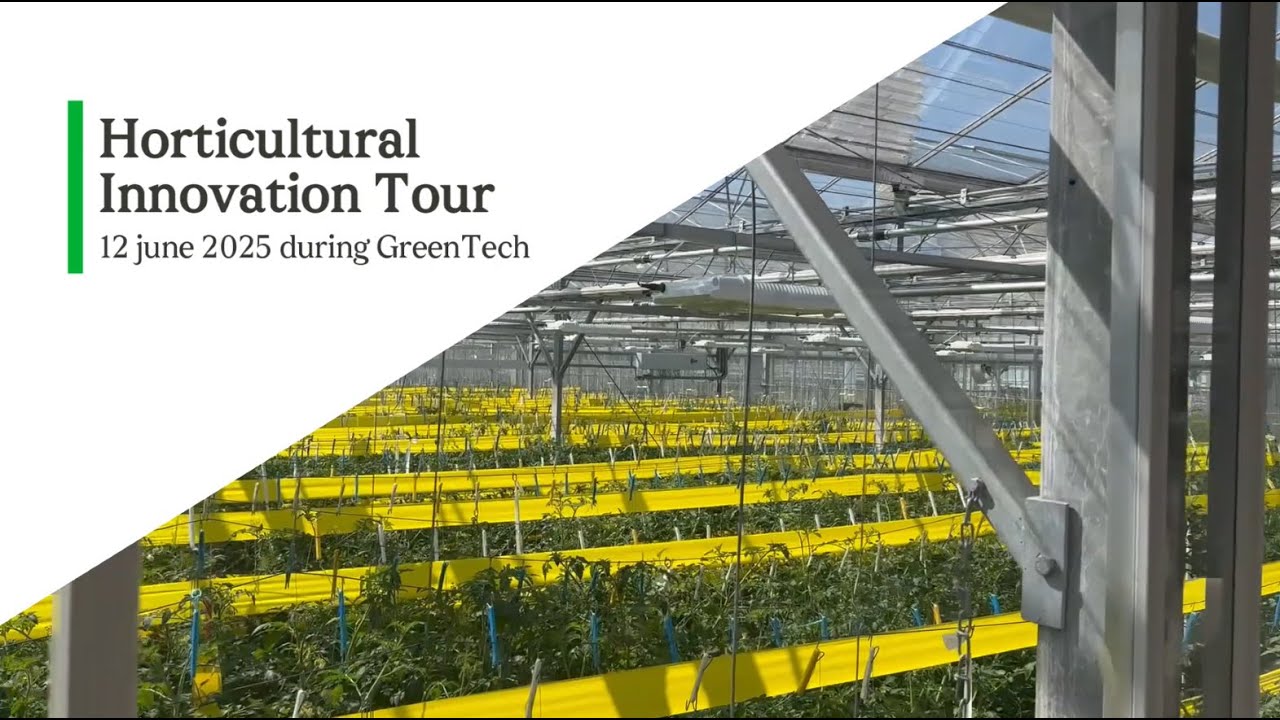
Every year in early June, right before GreenTech Amsterdam, we open the doors to the most innovative greenhouse operations in the region. One day, fully immersive: this is what Dutch horticulture looks like up close. Watch the aftermovie and mark your calendars for 2027.
You can view this embedded content after you have accepted cookies from YouTube.
Interested in exploring potential business opportunities in Zuid-Holland?