
From pilot to factory in 2031: how startup Phoenix Metals is scaling up in five years

A technology that works is not yet a scalable business. The founders of Phoenix Metals discovered this firsthand. They saw an opportunity to recover valuable raw materials from industrial waste. But how do you turn that potential into a product customers actually want to buy? And how do you prove that the process works at scale?
Phoenix has spent the past few years tackling these questions. Now, the startup is preparing for its next step: building a pilot plant in IJmuiden, with the ambition of starting commercial production by 2031.
From an idea to a clear focus
Phoenix’s journey began with a different challenge: finding a more efficient way to extract vanadium from ore. The founders were working on this in South Africa when their customer withdrew. That setback opened the door to a new opportunity: could vanadium be recovered from industrial waste streams instead?
They founded Phoenix Metals in 2020 and began exploring different waste streams, from refinery residues to maritime waste. But a startup cannot pursue every opportunity at once. In 2023, Phoenix decided to make steel slag its primary focus.
Tata Steel Netherlands alone produces around 650,000 tonnes of steel slag each year. Phoenix aims to recover valuable materials from it, including vanadium and manganese.
“A technology that works is not yet a scalable business. Through demonstration runs and, soon, a pilot plant, we are proving that our process also works on an industrial scale.”

Technology only matters if customers want your product
Just because something works technically does not mean customers can use it. Phoenix therefore had to look beyond the lab.
Through demonstration runs, the startup processed larger volumes of material and produced samples for potential customers. The focus shifted from the technology itself to its practical application. Does the product meet customer specifications? Is the quality consistent? And can customers actually use it?
Identifying those customers was another challenge. Phoenix serves two distinct markets: steel producers looking for ways to make use of their waste streams, and buyers of recovered raw materials, such as battery manufacturers.
Two markets, each with their own requirements and needs. Understanding both is essential before moving towards large-scale production.
You can view this embedded content after you have accepted cookies from YouTube.
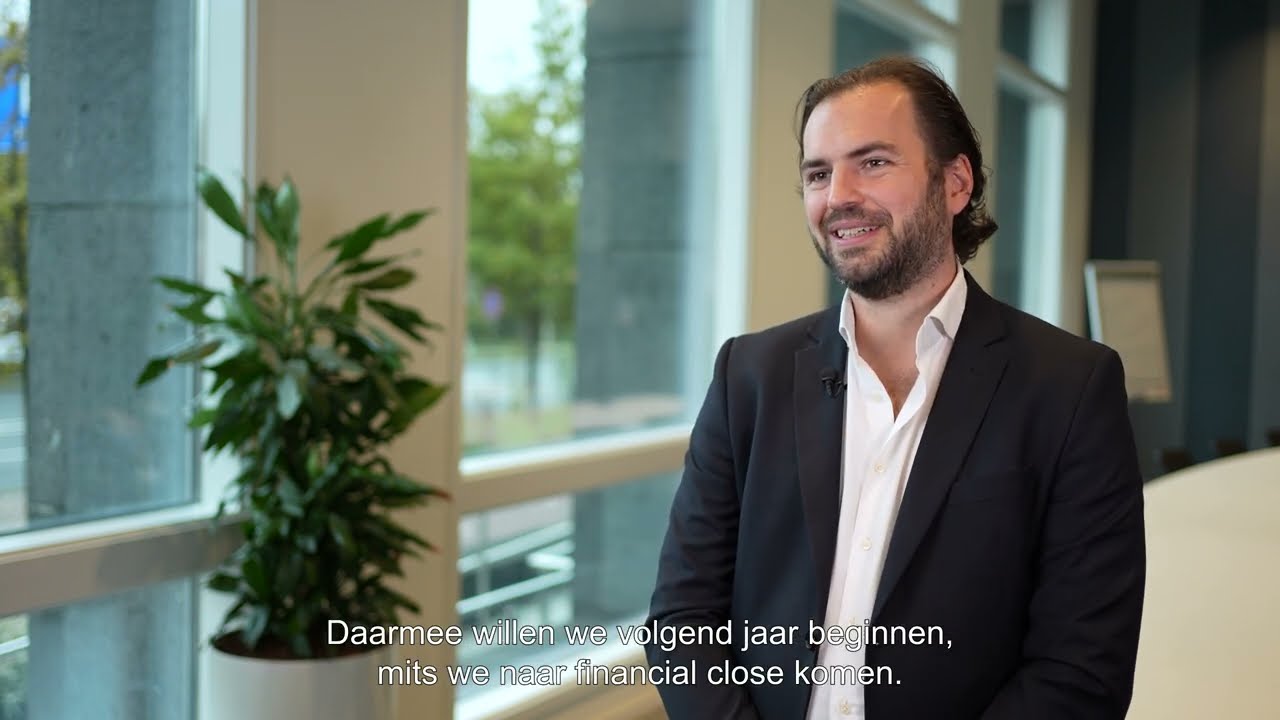
When are you ready to scale up?
For Phoenix, the next step is to test its technology in an industrial environment.
“You have to demonstrate that your technology works at scale.” — Gijsbert Bakker, CEO of Phoenix Metals
That is why the startup is developing a pilot plant in IJmuiden, initially designed to process around 500 tonnes of steel slag per year. The plant will need to demonstrate that the process operates reliably, delivers consistent product quality and produces sufficient material for customers to test the recovered products.
This evidence is essential before Phoenix can move towards a commercial-scale facility. Scaling up takes more than working technology. It also requires market insight, industrial partners and a convincing business case.
The next step takes more than a good idea
Building a pilot plant requires a different kind of investment. Funding is needed not only to build the facility, but also to demonstrate that the technology works on an industrial scale.
To support this next phase, Phoenix raised €4 million in seed funding from InnovationQuarter, ROM InWest and Mossinkoff Investments. [Link to investment announcement]
“This investment enables us to take the decisive step from development to production.” — Stijn van Zelst, COO of Phoenix Metals
Each stage builds on the previous one: testing generates knowledge, customer conversations reveal what the market needs, and funding makes the next real-world demonstration possible.
Entrepreneurship can feel lonely sometimes
But as an entrepreneur, you do not have to figure everything out on your own. Exchanging ideas with other startups, experts and partners can help you uncover blind spots and make better-informed decisions. Especially when scaling up, the challenges often go far beyond the technology itself.
“Sometimes you feel quite alone as an entrepreneur. It helps to exchange ideas with other entrepreneurs in the same sector who face similar challenges. They become a sounding board.” — Gijsbert Bakker, CEO of Phoenix Metals
From pilot plant to commercial production
With its pilot plant, Phoenix aims to lay the foundations for commercial production in 2031. Its ambitions extend beyond the Netherlands. By recovering valuable materials from industrial waste streams, the startup wants to help build a European industry that is less dependent on imported raw materials.
From an initial technical challenge to choosing a market, and from testing products with potential customers to securing funding for a pilot plant: Phoenix’s journey shows just how many steps lie between an innovation and a scalable business.
Looking to take your innovation to the next stage?
From technology development and market validation to funding and scaling up, InnovationQuarter can help you explore what it takes to move your innovation forward.