
Kalpana Systems: ‘International packaging producers must get their achievements and costs right’

How can you make packaging more recyclable without compromising on shelf life? Kalpana Systems develops machines that use spatial Atomic Layer Deposition (ALD) to add ultra-thin barrier coatings to flexible materials. The Dutch high-tech manufacturer received a new investment from the Australian Minderoo Foundation and current investors, including the Rotterdam Energy Transition Fund (ETFR). These will enable them to quickly bring the first commercial machines to market. “Our ultimate goal is to use spatial ALD to meet the performance requirements and costs of international packaging manufacturers.”
How do you make a sustainable barrier layer industrially scalable?
Packaging must protect products from oxygen and dampness. Composite plastic barrier layers, which are hard to recycle, are often used. Kalpana Systems is working on an alternative: ultra-thin coatings of just a few nanometers thick that are applied using spatial ALD technology.
This technology minimizes the use of barrier material. An innovative transport system allows the protective layers to be continuously and rapidly applied to flexible undercoatings. This roll-to-roll production method makes the technology suitable for industrial production and can strongly reduce costs.
Not only is Kalpana creating opportunities for more sustainable packaging, but also for solar cells and batteries. All these applications involve extremely thin layers that improve performance, limit materials use, and make large scale production possible.
“This investment round gives us the resources to quickly bring our flagship product, the K300 machine, to market.”
From a pilot to a commercial machine
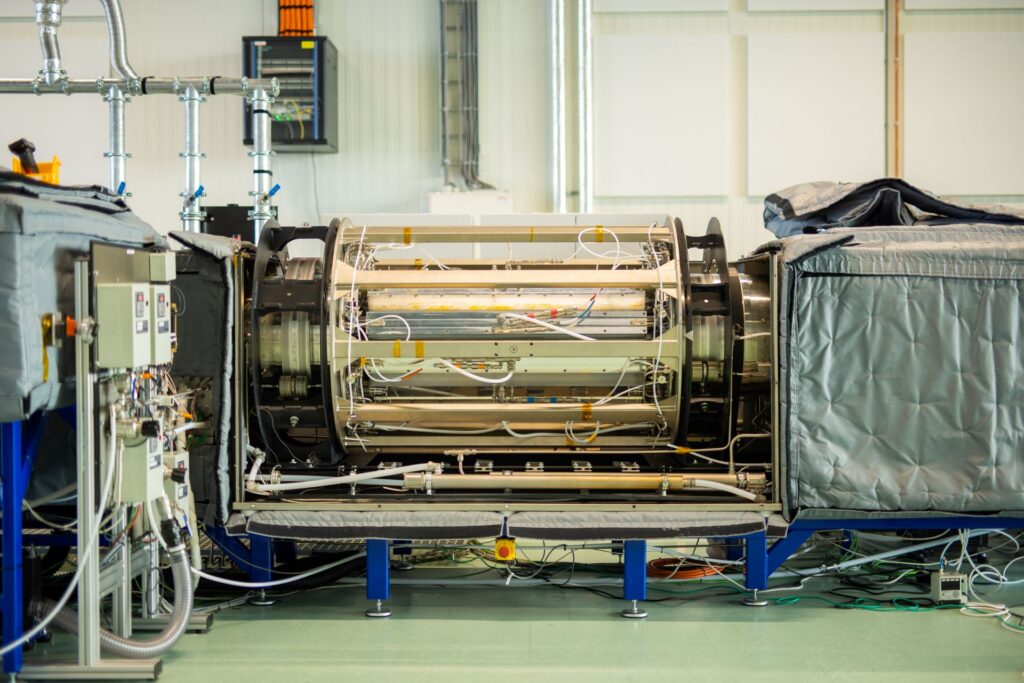
Kalpana Systems has taken the step to move from a prototype to an industrial platform. The new investment is speeding up the building of a commercial version of the thin film machine. This machine, which can be installed at producers’ premises, is expected in mid-2026.
At the same time, the company is working on a high-speed production line for sustainable packaging. It has a big goal: reaching production speeds that can be up to thirty times faster than the current standards. Only then the technology meet the needs of international packaging producers.
This is the phase where deep tech becomes exciting. The science works and the first applications have been proven, but the system now needs to be reliable, affordable, and scalable for industrial customers.
Recyclable packaging without concessions
The demand for recyclable and compostable packaging is growing fast. New European legislation and the sustainability goals of companies are putting pressure on the use of composite plastic packaging. At the same time, manufacturers do not want to compromise on shelf life, protection and the processability in existing production lines.
For this reason, various consumer goods multinationals are testing the Kalpana Systems’ nano-barrier coatings. The coatings can replace complex multilayers while offering comparable protection from oxygen and dampness. This means that packaging using paper or mono materials is completely recyclable.
Impact capital for international scaling up
The company has a strategic partner in the Minderoo Foundation that focuses on reducing plastic pollution and speeding up the use of circular materials. The current investors, including the Rotterdam Energy Transition Fund, will remain involved in the further scaling up.
That new financing is coming at an important point. Kalpana Systems is expanding the solar cell, OLED (organic light-emitting diode) and battery applications to sustainable packaging and is building the first commercial roll-to-roll sALD machine in its new site in Rotterdam. The company is finding interest there among technical universities, vocational education, and a growing network of deep tech and manufacturing companies.
As Mathijs van Rijk, Senior Investment Manager at ETFR, summarizes:. “Kalpana Systems has taken the step to move from a prototype to an industrial platform, a crucial phase that brings together science and market roll out.”
What is now possible
The near future will be marked by commercial adoption in 2026, higher production speeds, and further process improvements for barrier coatings and solar cells. To this end, Kalpana Systems is not only working on technology that works in the lab, but can also be used in international production chains.
If this works out, ultra-thin coatings will help make packaging recyclable or compostable, solar cells work better, and further improve batteries. From Rotterdam, Kalpana Systems is growing into a worldwide industrial player in sustainable thin film technology.
Do you also need financing to move from prototype to an industrial platform?
Kalpana Systems shows how growth capital helps proven deep tech scale up to commercial machines, international customers, and industrial production.
Get in touch with Marit